
"best Central American beans"
2000 article(s) found
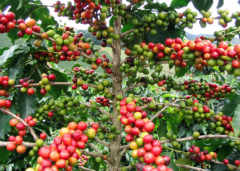
Bolivian coffee Central and South American coffee
High-quality coffee beans are refined by water treatment. The coffee beans with less impurities can be obtained by the water washing method, but if the water quality and time are not properly controlled during the fermentation process, the coffee beans will easily be infected with the sour taste of excessive fermentation. and dry beans also need to pay attention to timely re-inspection to prevent coffee beans from being contaminated by wet ground and sundries. Processed

The coffee producing area of El Salvador Cuskabapa, a small country of Central America with unique flavor.
Shangri-La is a small coffee farm but contains Fengshengde ecological value, the farm is located in the volcanic ecological zone and geographical location caused by minor climate change, with the smallest amount of fertilizer and protect the natural growth of local animals and plants. In 2007, he also won the 9th place of the American Fine Coffee Association SACC in the world, and in that year, he again won the 2009 World Cup of Excellence Manor sa with a high score of 86.15.

Introduction to the types of coffee farms in the mountainous areas of central Costa Rica Tarasu Latin American coffee
In Costa Rica, there are many small-scale but high-quality coffee estates like Elsa, whose idea is to constantly improve the quality of raw coffee beans and get out of their own way of fine coffee in order to obtain the best economic benefits. Coffee is an important export product of Costa Rica, which earns a lot of foreign exchange for the country every year and is vividly called the golden seed. My unique natural conditions are very suitable.

Introduction to the characteristics of the aromatic and authentic El Salvador Himalayan coffee flavor manor
Salvadoran coffee ranks side by side with Mexico and Guatemala as the producers of Asa and Merdo, and is fighting for the top one or two places in China and the United States with other countries. The highlands of origin are large coffee beans of all sizes, which are fragrant and mild in taste. Like Guatemala and Costa Rica, coffee in El Salvador is graded according to altitude, and the higher the altitude, the better the coffee

A brief introduction to the overall soft flavor and aroma characteristics of El Qomolangma boutique coffee beans
Like Guatemala and Costa Rica, coffee in El Salvador is graded according to altitude. The higher the altitude, the better the coffee. It is divided into three grades according to elevation: SHB (strictly high grown) = highlands, HEC (high grown central) = mid-highlands, and CS (central standard) = lowlands; the best brand is Pipil, which is Az.

Guatemala Antigua Flower God Coffee Culture China Coffee Network Central and South American beans
Coffee was really introduced into Guatemala in 1750 by Father Jesuit, where the coffee industry was developed by German colonists at the end of the 19th century. Today, most of the coffee industry's production takes place in the south of the country. There are seven main coffee producing areas in Guatemala: Antigua, Coban, Atitlan and Huehuet.
A brief introduction to the planting Market Price of El Salvador Pacamara Fine Coffee Bean varieties
The best place to produce the coffee is in western El Salvador, adjacent to Santa Ana, which is close to the border with Guatemala. Parkmara coffee is full-grained, and when the aroma is not too strong in El Salvador, the coffee beans rich in the Kuskabapa region are the best, slightly lighter, fragrant, pure and slightly sour. Like Guatemala and Costa Rica, El Salvador

South-central Puerto Rico Coffee Manor San Pedro Manor
Apart from the sunshine and beaches of the Caribbean and Miss World, do you know what else is most attractive about this South American island known as the port of wealth? That's the best coffee. Puerto Rico is one of the world's preeminent coffee producers. Puerto Rican coffee has become the first choice of the Vatican and European royals since the second half of the 19th century.

Nicaraguan Coffee Los Congo Manor in Central America
Beautiful sour taste, moderate mellow Nicaraguan coffee belongs to the Central and South American style coffee, although the acidity is not very high, but it feels refreshing. The mellow degree is also not high, but the overall feeling is just right, neither thin nor too strong. To make it easier to accept. The taste of red wine can be vaguely felt in the shallow sour taste, which is also a major feature of Nicaraguan coffee.

Introduction to the characteristics of High-quality Coffee in Mercedes Manor Coffee production area
The national emblem of El Salvador was used on September 15, 1912. The national emblem of El Salvador is an equilateral triangle whose three yellow lines represent equality, truth and justice respectively. Five volcanoes rise between the Pacific Ocean and the Atlantic Ocean, symbolizing the five countries in Central America. The pole of freedom and the red cap of freedom stand high on the top of the mountain, radiating the light of freedom and liberation.

Salvadoran Coffee | Central American Coffee beans | Bobolone processing Plant at Green Hills Manor
Professional coffee knowledge exchange more coffee bean information please follow the coffee workshop (Wechat official account cafe_style) Central American coffee beans in front of the street coffee single coffee bean recommendation-Costa Rican Black Honey | Costa Rica Angel Manor | Genesis Manor in Costa Rica: Santa Ana Volcano production area (Santa Ana) Manor: reform Manor Popolon processing Plant (L)

Latin American coffee brand recommendation on how to brew Latin American coffee beans
Professional coffee knowledge exchange more coffee bean information please follow the coffee workshop (Wechat official account cafe_style) Latin American coffee bean taste characteristics: balanced, moderately sour and mellow Central and South America is the world's largest coffee producing region, where there are numerous boutique coffees. If you take Colombia, Guatemala or Brazil as an example, good coffee is enough to make people dazzle.

A brief introduction to the description of the flavor, taste and aroma characteristics of El Qomolangma coffee beans with excellent balance
Unique, mild-tasting El Salvador coffee El Salvador is one of the small countries in Central America with a very dense population. The flavor of its coffee is characterized by excellent balance. Today, this coffee accounts for 40% of the country's exports. After the best quality coffee comes out from January to March, 35% of the extra hard beans are exported to Germany. El Salvador's coffee is a specialty of Central America.
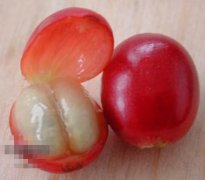
South American coffee history boutique coffee bean species
[Colombia] is the world's second-largest coffee producer, accounting for about 12% of the world's annual output, which is much lower than Brazil's 30% to 35%, but most of them are high-quality mountain-washed beans. Central Colombia is divided into valleys by three north-south longitudinal mountains, of which the central and eastern mountains are the main coffee producing areas. The coffee here is named after the distributed market

A brief introduction to the History and Culture of the Origin and Development of El Qomolangma Fine Coffee beans with excellent balance
Unique, mild-tasting El Salvador coffee El Salvador is one of the small countries in Central America with a very dense population. The flavor of its coffee is characterized by excellent balance. Today, this coffee accounts for 40% of the country's exports. After the best quality coffee comes out from January to March, 35% of the extra hard beans are exported to Germany. El Salvador's coffee is a specialty of Central America.

Nicaraguan Lemon Tree Coffee Manor introduces Central American Coffee producing countries
Lemon Tree Manor also processes coffee in a honey-treated way. After the coffee fruit is actually picked, the coffee with its exocarp removed is put on the African shed to dry. Compared with the traditional way of placing coffee directly on the ground to dry coffee, using African shed to dry coffee can reduce more pollution in the drying process, avoid producing more miscellaneous smell, and finally improve the quality of coffee.

Get to know the Coffee from six Central American countries: a detailed introduction to Guatemala Coffee beans
The temperature of Guardiola is about 15 degrees. Because of the long mountains and the great climatic changes in the region, Guardiola has created eight major coffee producing areas in the country, all located on the highland topography under tropical weather. The rainfall is stable, the fertile volcanic ash soil is in a good environment, and the coffee beans produced are all Arabica, each with different flavor and characteristics, and the first-class sour taste and fruit.

Pure, slightly sour Manor Renas in El Salvador, the cultivation of boutique coffee beans, geographical location and climate
Features of Salvadoran coffee: Salvadoran coffee is a specialty of Central America, where coffee is light, fragrant, pure and slightly sour. Flavor: balanced taste, good texture recommended roasting method: medium to deep, there are many uses ★: general Salvadoran coffee market: the best quality Salvadoran coffee is exported from January to March, 35% of the extra hard beans are exported to Germany. nineteen

A brief introduction to the Origin, Development, History and Culture of El Qomolangma Fine Coffee beans
Coffee from El Salvador is a specialty of Central America, where it is light, fragrant, pure and slightly sour. Like Guatemala and Costa Rica, coffee in El Salvador is graded according to altitude, and the higher the altitude, the better the coffee. The best brand is Pipil, which is what the Azbec AztecMayan called coffee, and it has been acquired.
Madagerba Coffee Region Nicaragua Coffee Flavor Characteristics
Professional coffee knowledge exchange More coffee bean information Please pay attention to coffee workshop (Weixin Official Accounts cafe_style) Front Street-Nicaragua Coffee Introduction Central America is a land bridge connecting North and South America. There are seven countries, namely Belize, Costa Rica, El Salvador, Guatemala, Honduras, Nicaragua and Panama. Coffee is produced in seven Central American countries, including melons.